
Arthroscopic Surgical Treatment with Bone Autograft and Compression Screw
The case of a patient with scaphoid necrosis treated arthroscopically, with bone autograft and a headless titanium compression screw, by Dr. Daniel Vîlcioiu's hand surgery team.
Accidents don't discriminate by age. But no matter what happens to you, you can get back to your pre-accident life as quickly as possible thanks to a professional medical team using state-of-the-art systems in surgery.
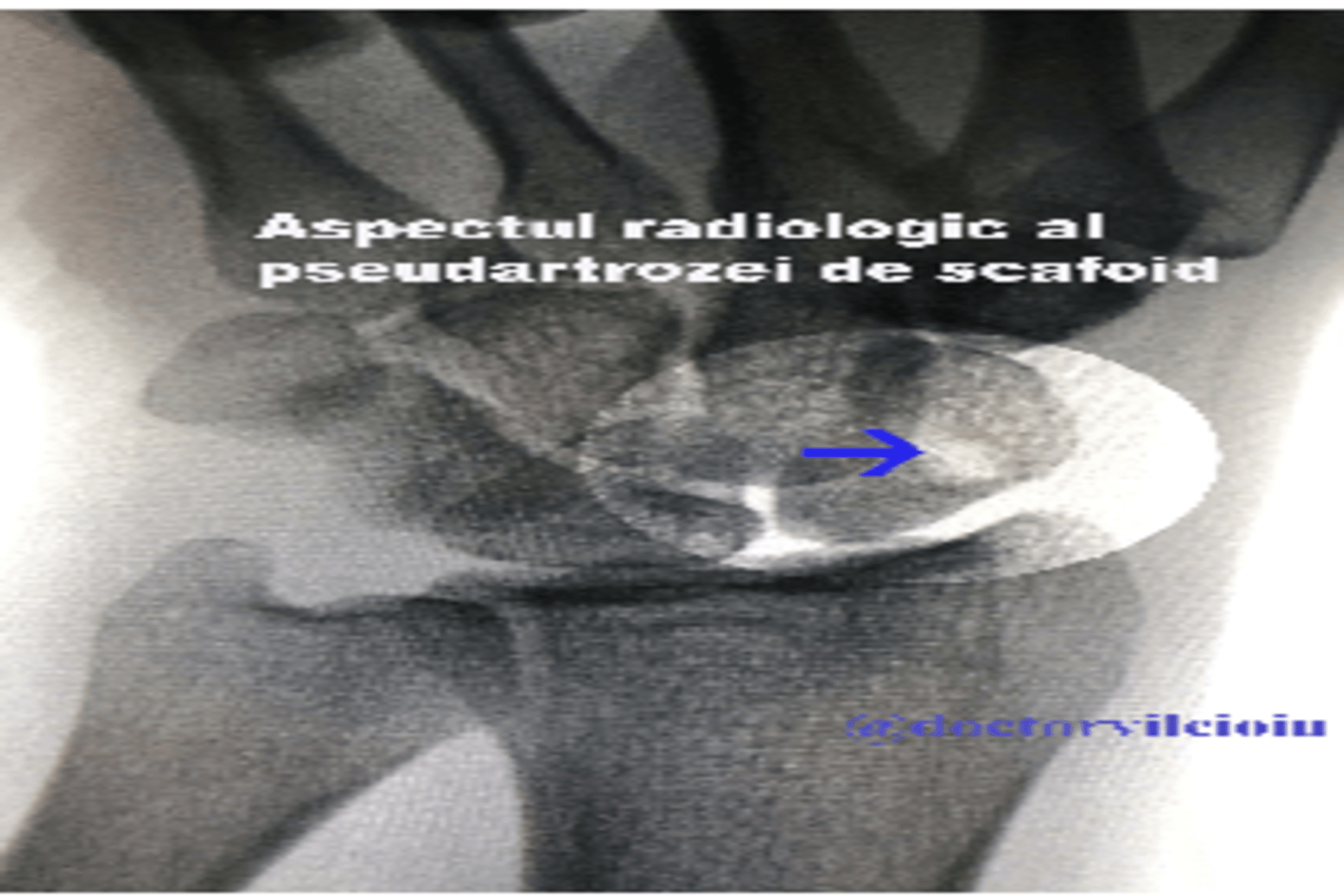
This was the case for a 34-year-old patient who was injured in a cycling accident. He arrived at Clinica Zetta, where Dr. Daniel Vîlcioiu diagnosed him with progressive necrosis at the proximal pole of the scaphoid.
Dr. Daniel Vîlcioiu's hand surgery team performed the arthroscopic procedure, using bone autograft and a titanium compression screw. Daniel Vîlcioiu is a specialist physician in Orthopedics and Traumatology, as well as a Doctor of Medical Sciences with a subspecialty in Hand Surgery. For this type of surgery, the patient needed only a one-day hospital stay. The patient was given loco-regional anesthesia, after which Dr. Daniel Vîlcioiu and his team made two small incisions of about 2-3 mm. They reduced and fixed the fracture, identified the unhealed lesions, then
removed the fibrotic tissue from inside the bone and milled down the bone ends, finally filling in the defect.
The headless compression screw
A 3.00 mm headless titanium compression screw was also used. This is a self-drilling, self-tapping screw that allows the surgeon to apply controlled compression. It can be used in arthrodesis, condylar fractures, radial styloid fractures, and metatarsal osteotomies. The screw is made of titanium and was manufactured by Johnson & Johnson and distributed in Romania by Ronda Medical.
The entire procedure took two hours, thanks to the surgical team and state-of-the-art equipment, including a mini fluoroscope that allowed precise placement of the screw.
Recovery
The patient had to remain immobilized and follow the hand therapy protocols. However, because the main advantage of this procedure is joint preservation, without opening the joint in the traditional way, the fractured area healed normally, since no excess scar tissue formed.