
GAP Nail (endo-exo medullary system)
Locked intramedullary nail with an endo-exo system (nail + plate), for patients with a narrow medullary canal — fractures and deformity corrections of the femur, tibia, and humerus.
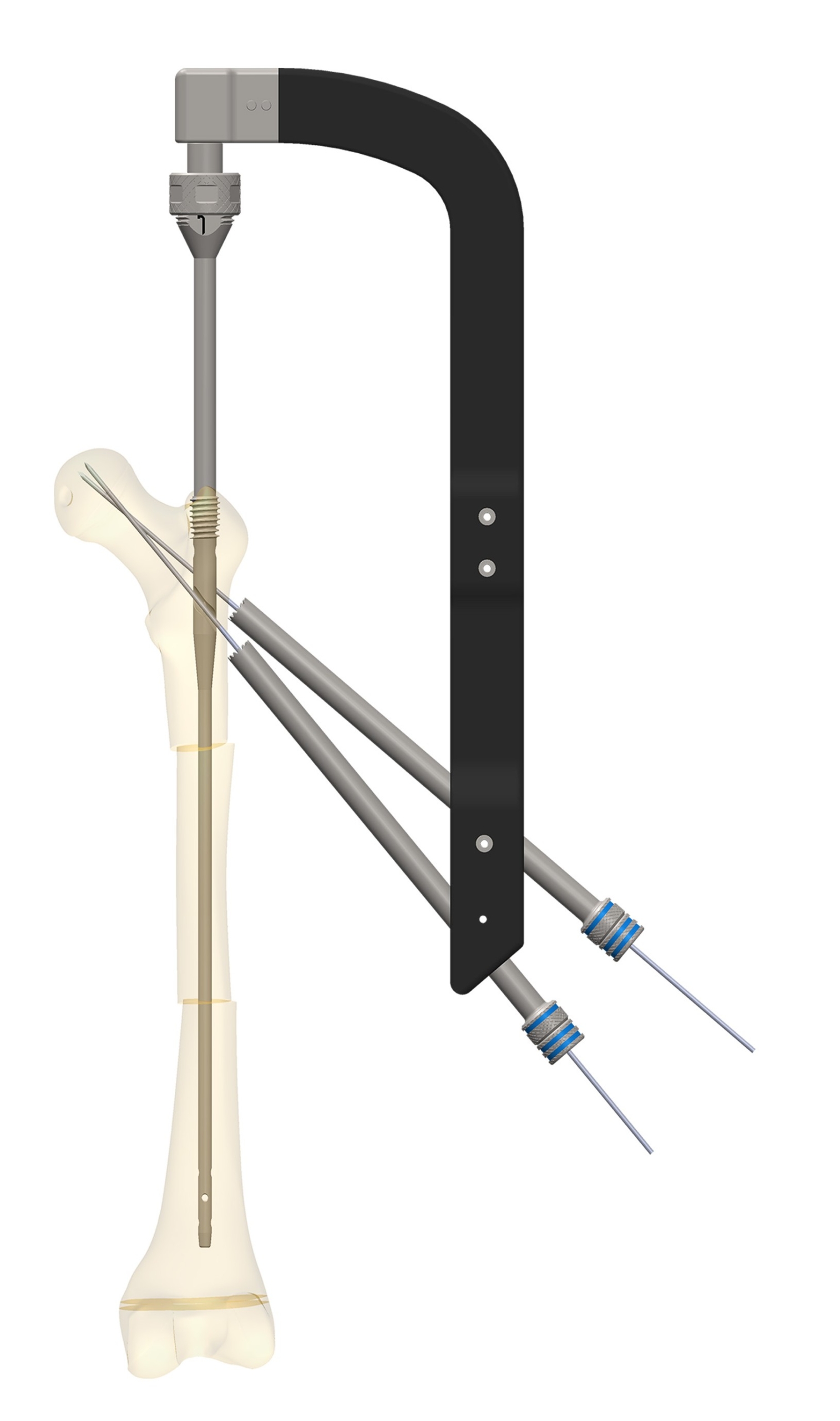
The GAP Nail is an endo-exo medullary osteosynthesis system developed by Pega Medical (an OrthoPediatrics group company). It consists of a locked intramedullary nail connected to a plate by lag and mechanical compression screws, forming a combined endomedullary/exomedullary device.
This configuration creates a load-sharing system between the nail and the plate, limiting the risk of stress fractures and improving implant stability in fragile bone. The system covers narrow medullary canals, with diameters from Ø4.8 to 8.0 mm — a range in which standard nails do not fit.
The plate provides support at the greater trochanter, while the coxa vara variant guides the Kirschner wires and supports the osteotomy. The instrumentation allows guided distal fixation and precise measurement of anteversion/derotation correction. The system is intended for pediatric patients who have reached skeletal maturity or for adults of small stature.
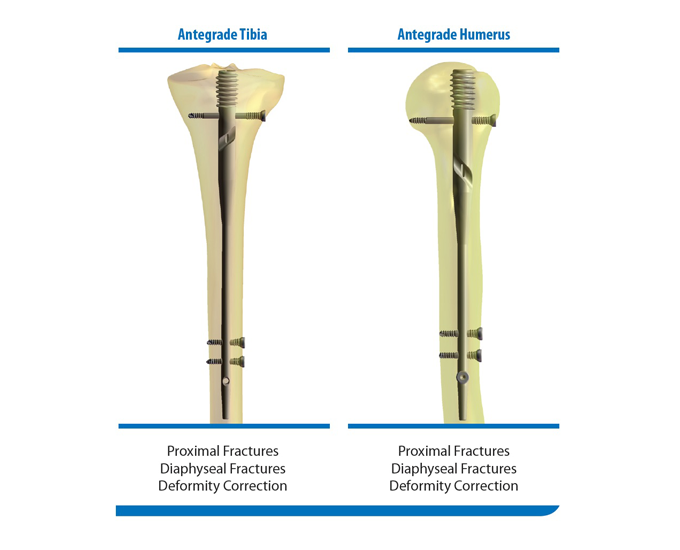
- Diaphyseal fractures of the femur, tibia, and humerus.
- Femoral neck, subtrochanteric, intertrochanteric, and combined fractures.
- Deformity correction (osteogenesis imperfecta, skeletal dysplasias, coxa vara, coxa valga).
- Nonunions (pseudarthrosis) and malunions.
Endo-exo system
Intramedullary nail connected to a plate, forming a combined endomedullary/exomedullary device.
Load sharing
Load sharing between the nail and the plate, limiting the risk of stress fractures in fragile bone.
For narrow canals
Covers diameters from Ø4.8 to 8.0 mm, where standard nails do not fit.
Greater trochanter support
Coxa vara variant for guiding the Kirschner wires and supporting the osteotomy.
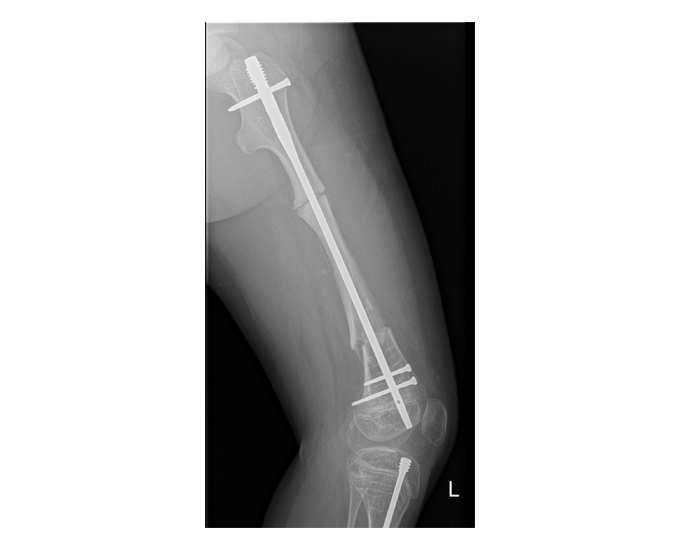
- Available diameters
- Ø4.8 – 8.0 mm (narrow medullary canals)
- System type
- Endo-exo medullary: intramedullary nail + plate (combined osteosynthesis)
- Biomechanical principle
- Load sharing between the nail and the plate
- Anatomical locations
- Femur, tibia, humerus
- Plate
- Support at the greater trochanter; coxa vara variant (Kirschner wire guidance + osteotomy support)
- Instrumentation
- Guided distal fixation; measurement of anteversion/derotation
- Target population
- Pediatric patients with skeletal maturity or adults of small stature
Would you like information about GAP Nail (endo-exo medullary system)?
The Ronda Medical team provides details about availability, configurations, and technical support.
Contact the team