Ronda Medical
SIGNUS Medical

DIPLOMAT® — Pedicle screw system

Modular posterior instrumentation system (screw–rod) for stabilization of the thoracolumbar spine (TH2–S2) — a single system for open, minimally invasive, and percutaneous techniques, with tulips interchangeable in situ.

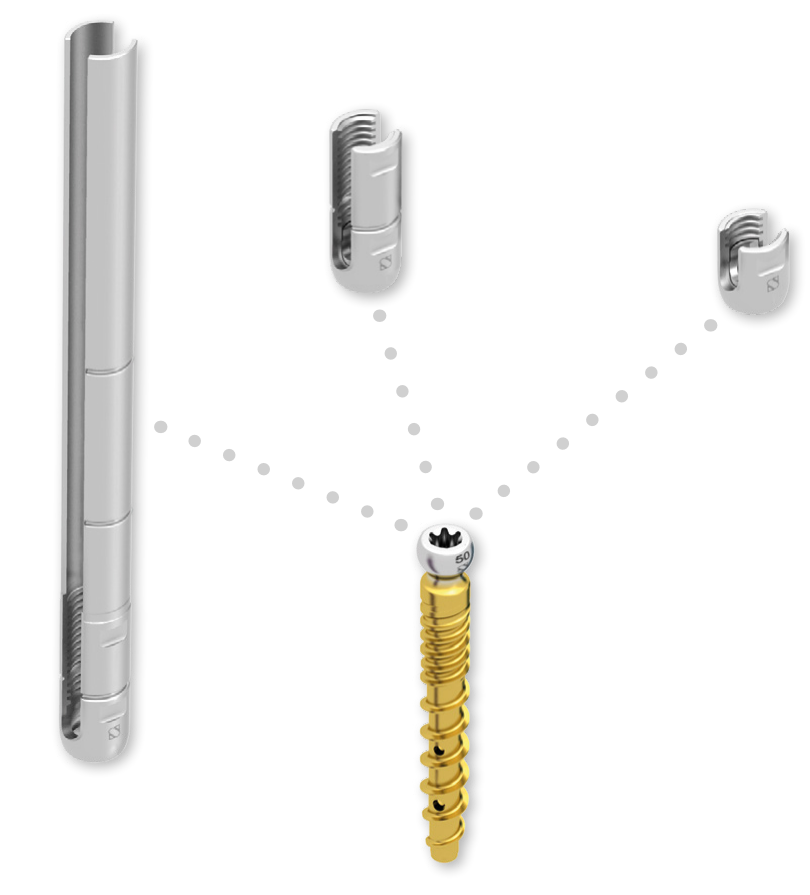
DIPLOMAT® — the system: the titanium rod, the three interchangeable tulips (standard, reduction, percutaneous), and the cannulated pedicle screw (official SIGNUS render)
TH2–S2Segment
Titanium / CoCrRods
14.9 mmTulip profile
Red Dot · seneticsAwards
Clinical description

DIPLOMAT® is a posterior instrumentation system (screw–rod) developed by SIGNUS for the stabilization and fusion of the thoracic and lumbar spine (TH2–S2). Conceived as "one system for all indications", it covers both simple and complex procedures, without the need to change systems when moving from a percutaneous or minimally invasive technique to an open one.

The defining feature is the tulip that is interchangeable in situ: the pedicle screw is a modular, two-piece implant in which the tulip (standard, reduction, or percutaneous) is selected according to the indication and can be mounted or replaced intraoperatively. The patented locking mechanism (Elastolok®) ensures a firm screw–tulip connection, verified in laboratory testing (tulip disengagement, rod push-out per ASTM F1798).

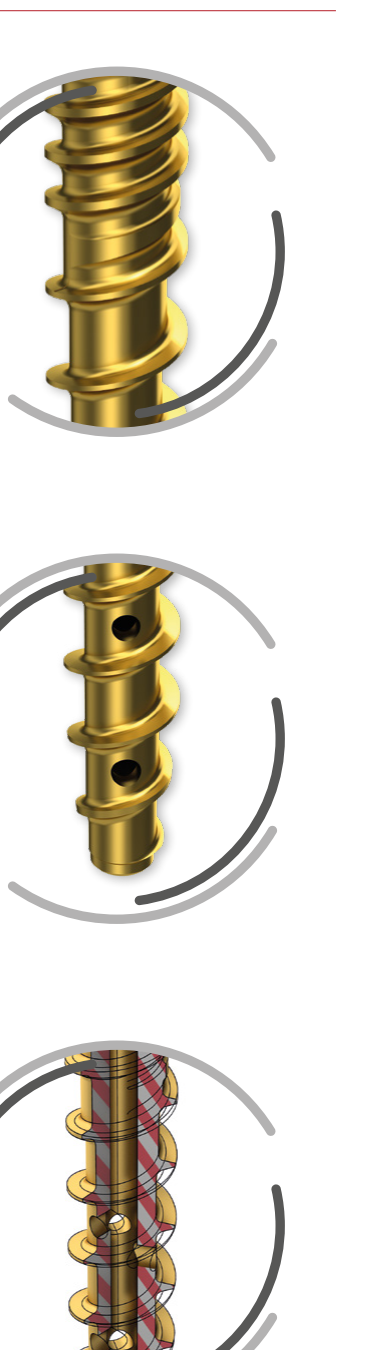
The screws have a self-tapping double thread, with a large pitch (4.5 mm) for rapid insertion, a cylindrical shank, and are cannulated (1.9 mm, for a 1.8 mm guidewire) and fenestrated, allowing optional cement augmentation from Ø 5.5 mm upward, through anatomically adapted perforations. The low-profile tulip (height 14.9 mm, Ø 12.5 mm) reduces tissue trauma and protrusion. The surgeon can choose titanium or cobalt-chromium rods, depending on the desired stiffness. For deformity correction, the system is extended with LSZ infralaminar hooks, in a hybrid screw–hook technique.

Indications
  • Stabilization and fusion of the thoracic and lumbar spine (TH2–S2), at one or more segments, until bony fusion is achieved.
  • Fractures; postoperative or degenerative instability; spondylolisthesis; stenosis; disc herniation or discectomy.
  • Tumors and spondylodiscitis; pathological lordosis/kyphosis/scoliosis; revision surgery; spinal instability or deformity.
  • Deformity correction by hybrid technique (pedicle screws + LSZ infralaminar hooks), including in osteoporotic bone.
Key features

Tulips interchangeable in situ

Modular two-piece implant; the tulip (standard, reduction, percutaneous) is selected and changed intraoperatively, according to the indication.

One system, all techniques

Open, minimally invasive, and percutaneous — without changing systems when moving to the open procedure.

Elastolok® locking

Patented locking mechanism for a firm screw–tulip connection; Torx T30 locking screw for high torque on the rod.

Self-tapping double thread

4.5 mm pitch for rapid insertion and optimal bone anchorage, without pre-tapping.

Cannulated and fenestrated

1.9 mm cannulation (1.8 mm guidewire); optional cement augmentation from Ø 5.5 mm, through anatomically adapted perforations.

Deformity extension (LSZ)

LSZ infralaminar hooks for the hybrid screw–hook technique in the correction of scolioses and deformities.

Product gallery
DIPLOMAT® — the system: the titanium rod, the three interchangeable tulips (standard, reduction, percutaneous), and the cannulated pedicle screw (official SIGNUS render)
DIPLOMAT® — detail of the pedicle screw: self-tapping double thread, cannulated and fenestrated shank, perforations for cement augmentation
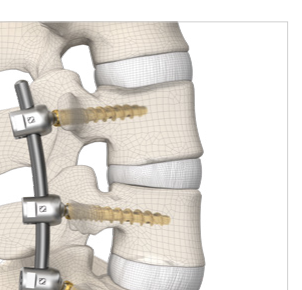
DIPLOMAT® — screw–rod construct fixed on the lumbar vertebral segments (anatomical SIGNUS render)
Technical specifications
Type
Posterior screw–rod instrumentation system (polyaxial), modular, two-piece
Level
Thoracic and lumbar spine, TH2–S2; one or more segments
Pedicle screws
Ø 4.5–9.5 mm, lengths 30–100 mm; self-tapping double thread, 4.5 mm pitch; cannulated (1.9 mm) and fenestrated
Augmentation
Optional with cement, from Ø 5.5 mm upward (dedicated applicators)
Tulips
Standard, reduction, and percutaneous — interchangeable in situ; Ø 12.5 mm, height 14.9 mm
Rods
Titanium (Ø 5.5 mm, straight or pre-bent) or cobalt-chromium (optional)
Locking screw
Torx T30, trapezoidal thread (avoids cross-threading)
Deformity extension
LSZ infralaminar hooks (5.0 / 7.5 / 10.0 mm) for the hybrid technique
Supply
Single-use, sterile implants
Clinical evidence

A selection of publications and studies that mention use of the system. Summaries are indicative; for details, consult the original source.

Pedicle screw system vs. lamina hook system — similar primary and long-term stability

Wilke H.-J., Kaiser D., Volkheimer D. și colab. · European Spine Journal, 2016; 25(9):2919–2928

In vitro biomechanical study, with quasi-static and dynamic loading, that simulated the long-term postoperative situation in elderly osteoporotic patients, comparing two stabilization principles: a pedicle screw system and a lamina hook system. The study is the reference cited by SIGNUS for the hybrid screw–hook technique (LSZ).

The two systems provide similar primary and long-term stability.
View source

Would you like information about DIPLOMAT® — Pedicle screw system?

The Ronda Medical team provides details about availability, configurations, and technical support.

Contact the team